AI at Work: Guide for SMB Owners
Where AI Fits and Where Human Judgment Still Matters
AI tools, such as ChatGPT, Bard, Microsoft Copilot, and others, are increasingly embedded in everyday productivity apps and MS Office. That means your team may already be using them to:
Draft emails or reports
Generate ideas
Summarize customer conversations
Screen resumes
This is powerful, but it also raises questions around accuracy, intellectual property, and accountability.
A Support Tool
Define acceptable use of AI tools
Clarify which tools are approved and for what purpose, e.g., drafting content vs. making business decisions.
Educate your team
Provide training on how AI works, including limitations and privacy risks. AI isn't perfect; it can hallucinate, misinterpret, or pull biased data. It doesn’t replace good decision making and judgement.

Photo by Steve Johnson on Unsplash
Employee Expectations & Ethical Use
We have heard concerns from team members and employees from “Will my job be replaced?” to “Can we use AI to monitor performance?”
This is where a thoughtful AI policy becomes essential.
Key Policy Areas to Address
Transparency
Are employees expected to disclose when they use AI in their work?Bias & Fairness
Ensure AI tools used for content or in recruitment are tested for fairness and do not discriminate.Privacy & Data Security
AI use can involve sensitive data. Ensure clarity that no specific company, client, or intellectual property data should be used or entered into third-party models.Performance Monitoring
If you use AI to analyze performance metrics or communications, employees should be informed of how and why.
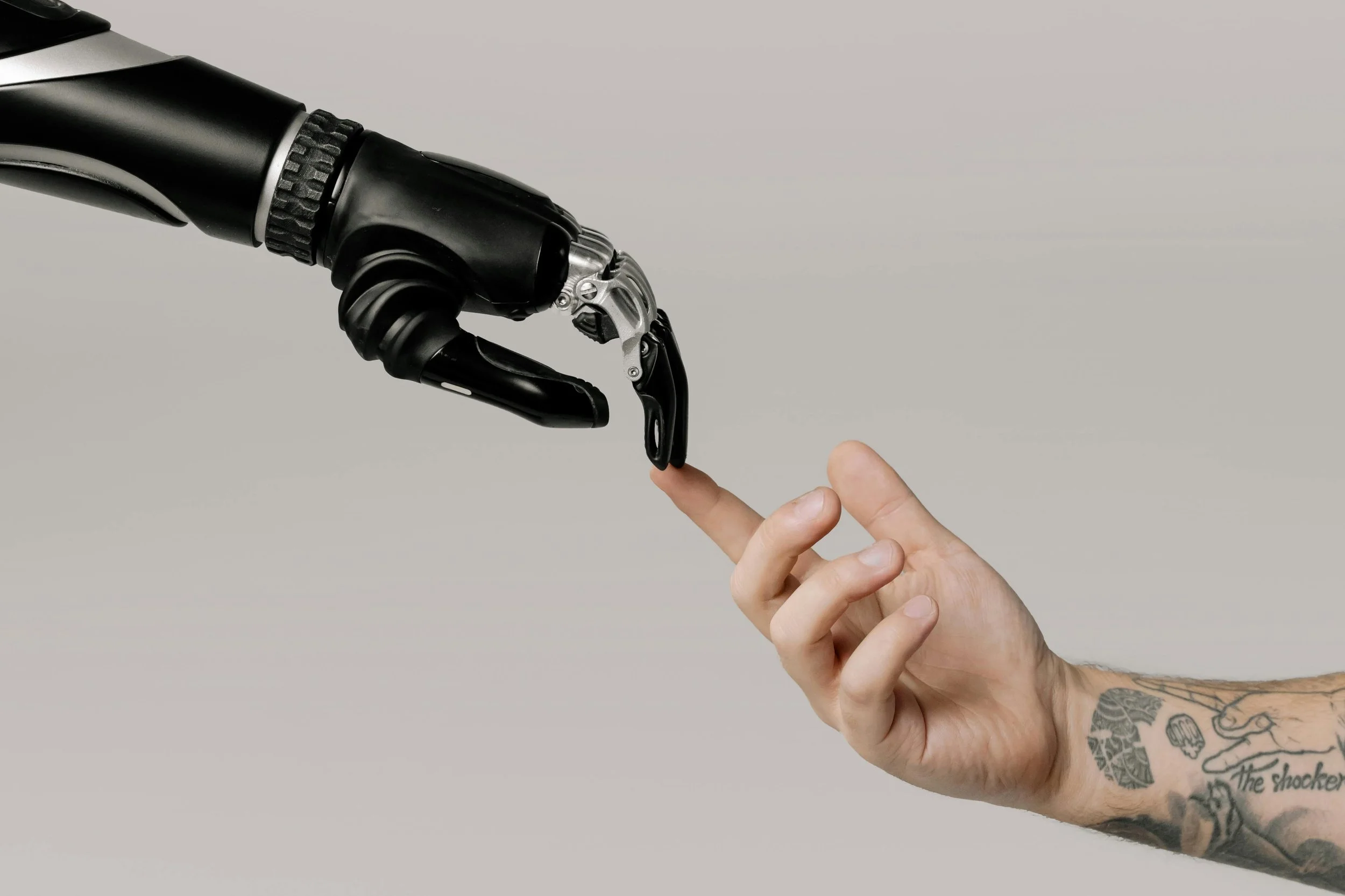
Photo by cottonbro studio: https://www.pexels.com/photo/bionic-hand-and-human-hand-finger-pointing-6153354/
Leadership Owns the AI Strategy
AI isn’t just a tech decision and the strategy should not reside with just IT or Finance. How your organization adopts AI may affect:
Culture
Employee trust
Recruitment and retention
Legal and ethical compliance

Photo by: Jack Moreh (Freerange Stock)
What Leaders Should Do
Assess risk and readiness
Review current systems, workflows, and data governance.Involve the right stakeholders
HR, legal, IT, Finance and business leaders should provide input and co-design your AI approach.Plan for continuous evolution
AI tools change fast. Build a process to review policies quarterly, not annually.
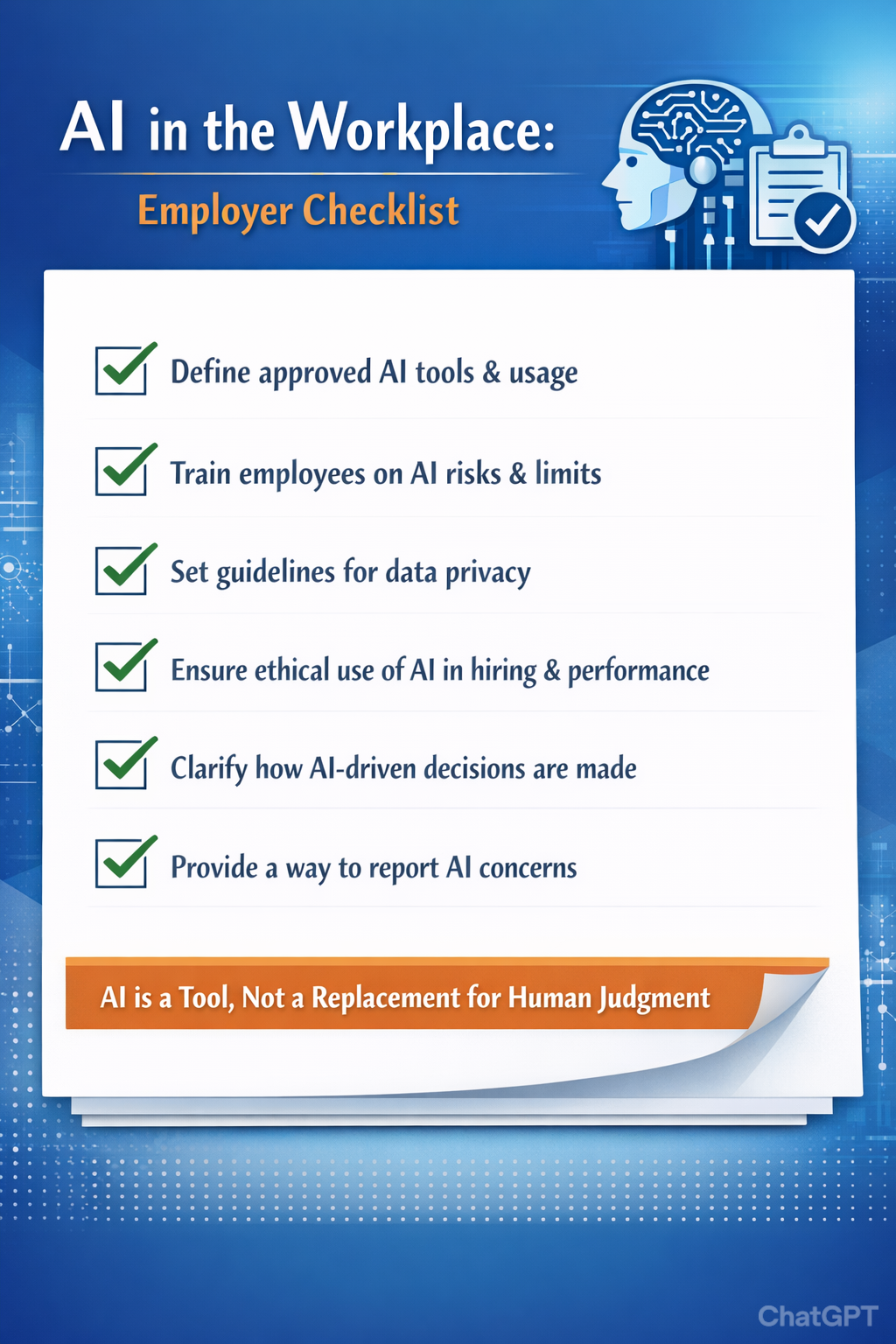
Checklist for Employers
We’ve created a checklist to help highlight the key items for your workplace. Don’t have a policy? Our team can help create an AI policy customized to your workplace and industry needs.